
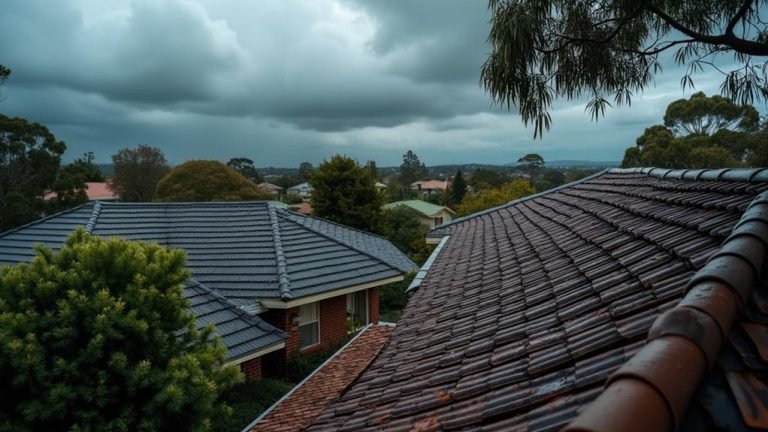
Roof leaks in Canberra homes often result from damaged or missing tiles, cracked flashing, and clogged gutters. Age-related wear and tear, improper skylight installation, and environmental factors like tree damage and ice dams also contribute.
Poor roof ventilation can exacerbate these issues, leading to premature ageing of materials and increased energy costs. Regular inspections and maintenance are essential to prevent leaks, especially after severe weather events.
You’ll need to address problems promptly, such as replacing broken tiles, resealing joints, and clearing debris from gutters. Understanding these common causes can help you take proactive steps to protect your home from costly water damage.
Damaged or Missing Roof Tiles
Cracked, broken, or missing roof tiles can leave your home vulnerable to water damage and leaks. These issues often arise from severe weather events, such as hailstorms or strong winds, which can dislodge or damage tiles.
Over time, the natural ageing process of your roof can also lead to tile deterioration, creating weak spots that allow water to penetrate.
To prevent leaks caused by damaged or missing tiles, you should:
- Conduct regular roof inspections, especially after severe weather events
- Look for signs of cracked, chipped, or missing tiles from ground level
- Check your attic or ceiling for water stains, indicating potential leaks
When you notice issues, prompt tile replacement is essential. This process involves:
- Removing the damaged tile
- Inspecting the underlying waterproof membrane
- Installing a new tile that matches your existing roof
Professional roof inspections are recommended at least once a year. Experts can identify problems that may not be visible from the ground and provide necessary repairs before they escalate.
Cracked Flashing
Flashing, a vital component of your roof’s waterproofing system, can develop cracks over time due to weathering, poor installation, or thermal expansion. When this happens, water can seep through these cracks, leading to leaks in your home. It’s essential to address cracked flashing promptly to prevent further damage.
Common areas where you’ll find flashing include:
- Around chimneys
- In roof valleys
- At roof penetrations (vents, skylights)
- Along roof edges
Here’s a breakdown of common flashing materials and their characteristics:
| Material | Durability | Cost | Ease of Installation |
|---|---|---|---|
| Aluminum | Moderate | Low | Easy |
| Copper | High | High | Moderate |
| Steel | High | Moderate | Moderate |
| Lead | Very High | High | Difficult |
When you notice signs of cracked flashing, it’s important to contact a professional for flashing repairs. They’ll assess the damage and recommend the best course of action, which may include patching, sealing, or replacing the flashing. Regular roof inspections can help catch flashing issues early, preventing more extensive damage and costly repairs down the line.
Clogged Gutters and Downspouts
Your gutters and downspouts play an important role in protecting your home from water damage, but when they’re clogged, they can’t do their job effectively.
Leaves, twigs, and other debris accumulate in your gutters, preventing proper water drainage and causing overflow that can lead to roof leaks and foundation issues.
Regular maintenance of your gutters and downspouts is vital to prevent these problems and guarantee your roof’s longevity.
Water Overflow and Damage
Overflowing with potential hazards, clogged gutters and downspouts can wreak havoc on your Canberra home. When debris accumulates in your gutters, it impedes proper water flow, leading to overflow and potential damage to your property. This buildup increases water pressure, causing water to spill over the sides of gutters and collect around your home’s foundation.
The consequences of water overflow can be severe:
| Area Affected | Short-term Impact | Long-term Damage |
|---|---|---|
| Foundation | Soil erosion | Structural cracks |
| Walls | Water stains | Mould growth |
| Landscaping | Plant damage | Soil instability |
To mitigate these risks, consider implementing effective drainage solutions. Regular gutter cleaning is essential, but you may also want to install gutter guards to prevent debris accumulation. Additionally, extending downspouts away from your home’s foundation can help direct water to safer areas.
If you notice signs of water damage, such as peeling paint or damp spots on walls, it’s important to address the issue promptly. Ignoring these warning signs can lead to more extensive and costly repairs down the line. By maintaining clean, functional gutters and downspouts, you’ll protect your Canberra home from water-related damage and preserve its structural integrity.
Debris Accumulation Effects
A silent menace lurks in the gutters and downspouts of many Canberra homes: debris accumulation. This often-overlooked issue can lead to significant roof damage and leaks if left unaddressed. As leaves, twigs, and other organic matter collect in your gutters, they create blockages that prevent proper water drainage.
Common debris types in Canberra include:
- Eucalyptus leaves and bark
- Pine needles
- Small branches
- Bird nests
- Seed pods
When gutters and downspouts become clogged, rainwater can’t flow freely away from your roof. Instead, it backs up and overflows, potentially seeping under shingles and causing water damage to your home’s structure.
In severe cases, the weight of accumulated debris and water can even cause gutters to sag or pull away from the roof.
Regular debris removal is essential to prevent these issues. You should clean your gutters at least twice a year, ideally in spring and autumn. For homes surrounded by many trees, more frequent cleaning may be necessary.
Consider installing gutter guards to reduce debris accumulation and make maintenance easier. By keeping your gutters clear, you’ll protect your roof and home from water damage and potential leaks.
Maintenance Importance Highlighted
Regular maintenance of gutters and downspouts is key to preventing roof leaks in Canberra homes.
These essential components of your roofing system play a vital role in directing water away from your property. When neglected, they can become clogged with leaves, twigs, and other debris, leading to water backup and potential damage to your roof and home’s structure.
To guarantee your gutters and downspouts function properly, implement these preventive measures:
- Schedule regular inspections, ideally twice a year
- Remove debris from gutters and downspouts
- Check for proper alignment and secure fastening
- Inspect for signs of rust or corrosion
- Confirm downspouts direct water away from your foundation
Age-Related Wear and Tear
As your roof ages, you’ll likely encounter issues stemming from deteriorating materials and weakened seals.
Over time, roofing components like shingles, tiles, and flashing can break down, creating vulnerabilities that allow water to seep through.
These age-related problems often manifest in cracked or missing shingles, deteriorated sealants around vents and chimneys, and compromised joints between different roofing sections.
Deteriorating Roofing Materials
Many Canberra homeowners face the inevitable challenge of deteriorating roofing materials due to age-related wear and tear. Over time, even high-quality roofing materials can degrade, compromising their weather resistance and protective properties.
This deterioration process affects various components of your roof:
- Shingles: They may crack, curl, or lose their protective granules.
- Tiles: Can become brittle, chip, or develop hairline cracks.
- Metal roofing: Might rust or experience corrosion at seams and fasteners.
- Flashing: May separate from the roof, leading to water infiltration.
The harsh Canberra climate, with its hot summers and cold winters, accelerates this deterioration. UV radiation from intense sunlight can cause materials to dry out and become brittle.
Freeze-thaw cycles in winter can lead to expansion and contraction, further weakening roofing components.
To mitigate these issues:
- Choose high-quality, weather-resistant materials during initial installation or replacement.
- Conduct regular roof inspections to identify early signs of deterioration.
- Address minor issues promptly to prevent more extensive damage.
- Consider applying protective coatings to extend the life of your roofing materials.
Weakened Seals and Joints
Time takes its toll on your roof’s seals and joints, leading to weakened connections that compromise its protective capabilities. As your home ages, the materials used to seal gaps and connect different roof components gradually deteriorate. This process, known as joint deterioration, can result in vulnerable points where water can penetrate your roof’s defences.
Seal integrity is vital for maintaining a watertight barrier against Canberra’s varied weather conditions. Over time, factors such as UV radiation, temperature fluctuations, and exposure to the elements cause sealants to shrink, crack, or lose their adhesive properties.
Common areas affected include:
- Flashing around chimneys, vents, and skylights
- Roof valleys where different sections meet
- Edges of roofing tiles or shingles
- Seams in metal roofing panels
Regular inspections are essential to identify and address weakened seals and joints before they lead to significant leaks.
Professional roofers can assess the condition of these important areas and apply appropriate remedies, such as:
- Resealing gaps with high-quality, weather-resistant sealants
- Replacing deteriorated flashing
- Reinforcing weakened joints with additional fasteners or adhesives
Improperly Installed Skylights
Frustration often accompanies improperly installed skylights, a common culprit for roof leaks in Canberra homes.
Skylight installation requires precision and expertise to guarantee a watertight seal between the roof and the skylight unit. When installers lack proper training or rush the job, they may overlook vital sealing techniques, leading to vulnerabilities in your roof’s integrity.
Common installation errors include:
- Incorrect flashing application
- Inadequate weatherproofing around the skylight frame
- Poor alignment with roof pitch
- Improper sealing of joints and edges
These mistakes can result in water infiltration during Canberra’s frequent rain showers. Over time, even small leaks can cause significant damage to your home’s structure and interior.
To prevent skylight-related leaks:
- Hire certified professionals with experience in skylight installation
- Ascertain the use of high-quality, compatible materials
- Request regular inspections and maintenance
If you suspect your skylight is leaking, don’t delay in addressing the issue.
Prompt action can prevent extensive water damage and costly repairs. Contact a reputable roofing specialist to assess and rectify any installation problems, guaranteeing your skylight enhances your home without compromising its structural integrity.
Tree Damage
While skylight issues can be problematic, tree damage poses another significant threat to Canberra roofs. Overhanging branches and falling limbs can cause severe damage to your roof’s structure, leading to leaks and other issues.
During storms, strong winds can turn branches into projectiles, potentially puncturing your roof or damaging shingles.
To protect your roof from tree damage, consider these preventive measures:
- Regular tree pruning to remove dead or weak branches
- Maintaining a safe distance between trees and your home
- Installing gutter guards to prevent leaf buildup
Storm preparation is vital in minimizing tree-related roof damage. Before severe weather hits, inspect your property for potential hazards.
Remove any loose branches or debris that could become airborne during high winds. If you have large trees near your home, consider hiring a professional arborist to assess their health and stability.
In the event of tree damage to your roof, it’s essential to address the issue promptly.
Even minor damage can lead to more significant problems if left unattended. Contact a professional roofing contractor to assess the extent of the damage and recommend appropriate repairs.
Ice Dams in Winter
Although Canberra’s winters aren’t typically severe, ice dams can still form on roofs during cold snaps, leading to potential leaks and damage.
Ice dams occur when snow or ice accumulates on your roof, then melts and refreezes at the edges. This process creates a barrier that prevents proper drainage, causing water to back up under your shingles.
To prevent ice dams:
- Guarantee proper attic insulation to maintain a consistent roof temperature
- Improve ventilation in your roof space to reduce heat buildup
- Clear gutters and downspouts of debris before winter
- Consider installing heat cables along your roof’s edge
If you notice ice dams forming:
- Avoid using salt or chemical ice melt products, as they can damage your roof
- Use a roof rake to carefully remove snow buildup
- Create channels in the ice to allow water drainage
During winter conditions, it’s vital to monitor your roof for signs of ice dam formation.
Look for icicles hanging from your gutters or water stains on your ceiling. If you suspect ice dams are causing leaks, contact a professional roofing contractor immediately to assess and address the issue before it leads to more significant damage.
Poor Roof Ventilation
Poor roof ventilation often leads to a host of problems for Canberra homeowners. When your roof lacks proper air circulation, it can cause excessive heat and moisture buildup in your attic space.
This trapped heat and moisture can lead to several issues, including:
- Premature ageing of your roofing materials
- Increased energy costs due to overworked air conditioning systems
- Growth of mould and mildew, which can affect your home’s air quality
To address these concerns, you’ll need to evaluate ventilation improvements. Proper roof ventilation allows for a consistent flow of air, helping to regulate temperature and moisture levels in your attic.
This can be achieved through the installation of ridge vents, soffit vents, or whirlybirds. By improving air circulation in your roof space, you’ll not only extend the life of your roofing materials but also enhance your home’s overall energy efficiency.
Additionally, proper ventilation helps prevent the formation of ice dams in winter, which can lead to serious leaks and water damage.
If you’re unsure about the state of your roof’s ventilation, it’s best to consult with a professional roofing contractor who can assess your specific needs and recommend appropriate solutions.
Frequently Asked Questions
How Often Should I Have My Roof Professionally Inspected?
You should have your roof professionally inspected at least once a year for proper maintenance. However, if you live in an area with extreme weather conditions, it’s wise to increase your inspection frequency to twice annually.
Can DIY Roof Repairs Effectively Address Leaks in Canberra Homes?
While DIY techniques can temporarily address minor leaks, they’re often insufficient for Canberra homes. You’ll achieve better leak prevention by relying on professional roofers. They have the expertise and tools to effectively diagnose and repair complex roofing issues.
What Signs Indicate a Potential Roof Leak Before Water Damage Occurs?
For early warning leak detection, you’ll want to look for water stains on ceilings, peeling paint, damp spots in the attic, or mould growth. Don’t ignore musty odours or unexplained increases in energy bills. These signs can indicate potential roof leaks.
Are Certain Roofing Materials More Prone to Leaks in Canberra’s Climate?
You’ll find that metal roofing has advantages in Canberra’s climate, as it’s less prone to leaks. Tile roofing, while attractive, can be more susceptible to damage and leaks due to its weight and individual-piece construction.
How Much Does It Typically Cost to Repair a Roof Leak?
You’ll find repair costs vary widely, typically ranging from $300 to $1,500 depending on the leak’s severity. It’s wise to invest in regular maintenance and leak prevention measures, which can save you money in the long run.
Final Thoughts
You’ve now learned about the main causes of roof leaks in Canberra homes. By staying vigilant and addressing these issues promptly, you’ll safeguard your property from water damage and costly repairs. Remember to conduct regular roof inspections, especially after severe weather events.
Don’t hesitate to call a professional if you’re unsure about any roof-related concerns. With proper maintenance and timely interventions, you’ll guarantee your home remains dry and secure for years to come.